
Introduction
Welcome to the fascinating world of Artificial Intelligence (AI)! If you’ve ever wondered what AI is, how it impacts our daily lives, or where it’s headed in the future, you’re not alone. AI is a term that often sounds complex and technical, but at its core, it’s about creating machines that can think, learn, and adapt just like humans. With every new technology and innovation, the discussions around AI are only growing richer and more intricate.
In this article, we will explore what Artificial Intelligence (AI) is with a simple explanation aimed at beginners. We’ll break down the complexities of AI into manageable insights, touching on its history, key concepts, benefits, applications, and future implications. So, whether you’re a tech enthusiast, a curious learner, or someone anxious about what AI will mean for our world, this guide is crafted just for you. Let’s embark on this journey together!
Why Understanding AI Matters
Understanding Artificial Intelligence isn’t just for tech-savvy individuals; it’s essential for everyone. Here are some reasons why knowing about AI is beneficial:
Key Benefits
- Job Relevance: As AI continues to shape industries, being knowledgeable about it can enhance your career prospects. Many job roles now require a foundational understanding of AI technologies and their applications.
- Informed Decision-Making: AI systems influence everything from news feeds to shopping recommendations. Understanding how they work can empower you to make better choices in your daily life.
- Future Preparedness: AI is set to play a significant role in our futures, from healthcare to transportation. Knowing about its implications can help you adapt to and even embrace these changes.
- Engagement in Conversations: AI is increasingly part of public discourse, from ethical debates to technological advancements. Being informed can help you engage in these discussions knowledgeably.
Now, let’s dive deeper into the essence of AI, breaking it down into easily digestible parts.
What is Artificial Intelligence?
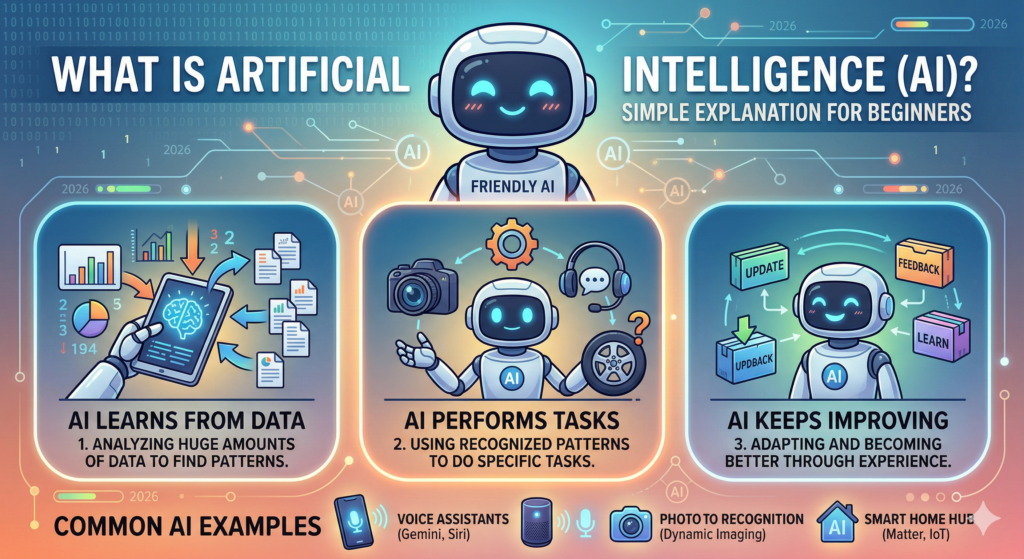
Artificial Intelligence refers to the simulation of human intelligence processes by machines, particularly computer systems. These processes include learning (the acquisition of information and rules for using it), reasoning (using rules to reach approximate or definite conclusions), and self-correction.
Types of AI
AI can be broadly categorized into two types:
- Narrow AI: This is the most common form of AI today. Narrow AI is designed to perform a specific task, such as voice recognition, image analysis, or playing a game. Examples include virtual assistants like Siri or Alexa, which excel in particular areas but don’t possess general intelligence.
- General AI: This is the hypothetical form of AI that would outperform humans at nearly every cognitive task. General AI doesn’t exist yet, but it’s a topic of ongoing research and speculation among scientists and futurists.
How Does AI Work?
Understanding how AI works involves grappling with concepts like algorithms, machine learning, and data. Here’s a brief overview:
- Algorithms: At its core, AI is driven by algorithms—a set of rules or instructions for solving specific problems. These algorithms allow AI systems to process data and make decisions based on that data.
- Machine Learning (ML): This is a subset of AI that enables machines to learn from data. Instead of being explicitly programmed, a machine uses algorithms to analyze data, identify patterns, and improve over time. For instance, a recommendation system on a streaming service learns from your viewing history to suggest shows you might like.
- Deep Learning: A subset of machine learning that uses neural networks to mimic human brain function. It’s widely used in image and speech recognition. For instance, platforms like Google Photos utilize deep learning to recognize faces in pictures.
Practical Example
Consider a smart email filtering system. It uses machine learning to analyze the content of incoming emails, identifying spam based on patterns it has learned over time. The more emails it processes, the better it gets at filtering out unwanted messages.
Applications of AI
AI is everywhere, transforming industries and our daily lives in numerous ways. Here are several key applications:
1. Healthcare
AI systems are revolutionizing healthcare, from diagnosing diseases to personalizing treatment plans. For instance, AI algorithms can analyze medical images like X-rays or MRIs to detect anomalies that a human eye might miss. These systems facilitate quicker diagnoses, allowing doctors to take timely action, ultimately saving lives.
2. Finance
In finance, AI is used for fraud detection, personalized banking, and automating customer service. Algorithms analyze transaction patterns to flag suspicious activities, making banking safer for customers. Additionally, robo-advisors use AI to offer personalized investment advice based on individual financial situations.
3. Transportation
Autonomous vehicles are perhaps the most exciting application of AI. Companies like Tesla and Waymo are developing self-driving cars that can navigate using AI. These vehicles rely on sensors and cameras to interpret their surroundings, making real-time decisions to drive safely.
4. Entertainment
AI influences what we watch and listen to. Streaming platforms use AI algorithms to recommend movies, shows, and music based on user preferences and behavior. It ensures that the content delivered aligns with our interests, enhancing user engagement and satisfaction.
5. Smart Assistants
Devices like Amazon Echo and Google Home use AI to perform tasks via voice commands. They can play music, provide weather updates, control smart home devices, and even answer trivia questions—all thanks to voice recognition and natural language processing technologies.
The Importance of AI in Everyday Life
Understanding the importance of AI in daily life helps contextualize its application and relevance. Here are a few reasons AI matters to you:
1. Improved Efficiency
AI enhances efficiency by automating repetitive tasks, reducing human error, and enabling companies to operate faster and more accurately. This can lead to improved productivity in workplaces and makes daily tasks easier for individuals.
2. Personal Convenience
Think about how AI simplifies life. From navigation apps that avoid traffic to online shopping recommendations, AI enhances customer satisfaction by personalizing experiences and anticipating needs.
3. Enhanced Safety
In many industries, AI is improving safety protocols. For example, predictive maintenance powered by AI can forecast equipment failures before they happen, minimizing risks in manufacturing and aviation.
4. Environmental Benefits
AI is also making strides in environmental conservation. Machine learning models are being used to monitor climate patterns, optimize energy consumption, and predict natural disasters, which can help in planning and response.
Practical Tip
To engage with AI technology responsibly, consider adjusting privacy settings on platforms that utilize AI. Educate yourself about data collection practices to ensure your information is handled according to your preferences.
Potential Concerns with AI
While AI brings many benefits, it’s essential to be aware of potential concerns:
1. Job Displacement
One significant worry is job displacement due to automation. While AI can take over repetitive tasks, it might lead to fewer jobs for humans in certain sectors, prompting a need for reskilling and adapting to new roles.
2. Ethical considerations
AI development raises ethical questions about bias, transparency, and accountability. If AI systems are trained on biased data, they can perpetuate or even exacerbate inequalities. Ensuring fairness in AI is a critical issue researchers and developers are working to address.
3. Privacy Issues
As AI systems collect and analyze vast amounts of data, privacy becomes an essential concern. It’s crucial to ensure that individuals’ data rights are respected and that there are boundaries on how personal information is used.
FAQ Section
1. What is Artificial Intelligence in simple terms?
AI is the simulation of human intelligence in machines that are programmed to think and learn like humans. It processes information and makes decisions based on that input.
2. How is AI used in everyday life?
AI is used in various applications such as smartphone assistants, recommendation systems on streaming platforms, and smart home devices that learn user preferences.
3. Are all AI systems the same?
No, AI systems vary in complexity. Some are designed for specific tasks (narrow AI), while others, which do not currently exist, would have broader cognitive abilities (general AI).
4. Is AI safe to use?
While AI can bring many benefits, understanding its implications, particularly around privacy and data security, is essential. Using AI responsibly includes educating yourself about data collection practices.
5. Will AI take away jobs?
AI can automate certain tasks, but it can also create new job opportunities. The nature of work may change, leading to the need for reskilling and adapting to new roles.
6. How does AI learn?
AI systems learn through algorithms, especially machine learning, which allows them to analyze data, identify patterns, and make decisions based on those patterns over time.
7. Can I use AI in my own projects?
Absolutely! Many user-friendly AI tools and platforms are available that allow individuals and businesses to incorporate AI into their projects without deep technical expertise.
Conclusion
Artificial Intelligence is more than just a buzzword—it’s a transformative force reshaping how we live, work, and interact. As we’ve explored, AI encompasses a vast array of applications and implications that are crucial to understand as we move forward.
So why not stay curious? Embrace the opportunities presented by AI, and don’t hesitate to explore this fascinating realm further. As new developments emerge, staying informed will not only keep you relevant but also empower you to participate in shaping a future where technology works for the benefit of all.
If you’re eager to learn more about technology trends and their implications, also read our 10 Free Websites That Can Replace Expensive Software in 2026
Leave a Reply