
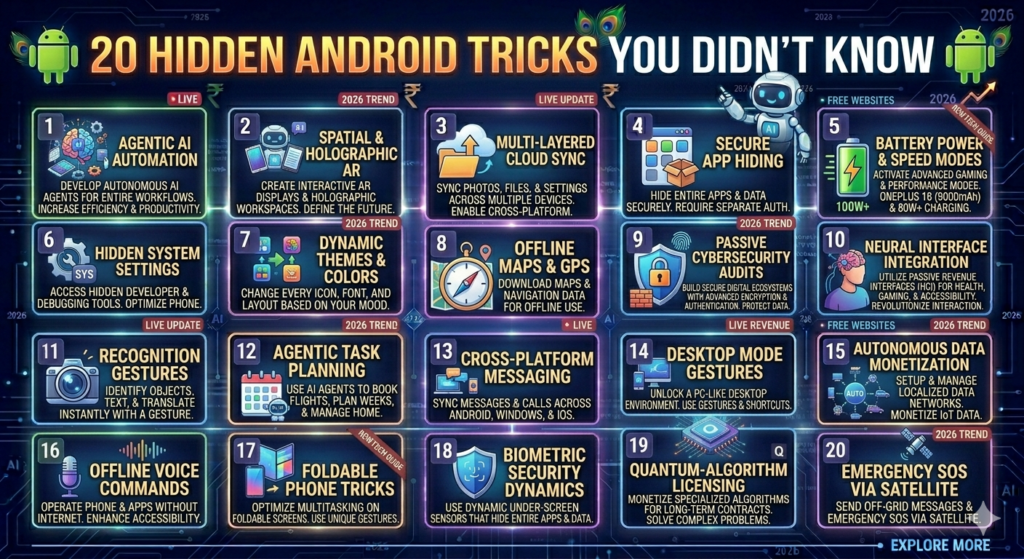
20 Hidden Android Tricks You Didn’t Know About (2026 Edition)

gemini generated image wdifmcwdifmcwdif

Introduction

Android devices are not just smartphones; they’re powerful tools that can drastically enhance our daily lives. Yet, many users are unaware of the hidden features and tricks that can make their experience smoother and more enjoyable. In 2026, the Android operating system is more powerful than ever, but navigating through it can sometimes feel overwhelming. That’s why I’ve compiled this list of 20 hidden Android tricks you didn’t know about.

Whether you’re a novice or an experienced user, these tips will help you unlock features that you may not have known existed. From enhancing your device’s performance to customizing your user experience, these tricks are designed to make your life easier. So, let’s dive into this exciting world of Android secrets!


Importance/Benefits of Knowing These Tricks

Understanding these hidden tricks isn’t just for tech enthusiasts; it benefits everyone. Here are a few reasons why knowing these hidden Android tricks can be extremely valuable:

  1. Enhanced Productivity: Small tweaks can save you time and make everyday tasks more efficient.
  2. Customization: Every user has unique needs. These tricks allow you to tailor your Android experience to your preferences.
  3. Improved Functionality: Many users are unaware of features that can significantly enhance functionality, such as better notifications or multitasking capabilities.
  4. Better Battery Life: By implementing these tricks, you can optimize your battery usage, allowing for longer-lasting performance.

By implementing these tricks, you’ll not only make your device work better, but you’ll also improve your overall experience. So, let’s get started!


1. Enable Developer Options

What Is Developer Options?

The Developer Options menu contains settings that are generally hidden to accommodate average users. You can access advanced features such as USB debugging or animation scales to speed up your device.

How to Enable It

To enable Developer Options, go to Settings > About phone, then tap on Build number seven times. You’ll get a prompt that says you’re now a developer. Now, go back to Settings, and you’ll see the Developer Options menu.

Practical Tip

Once enabled, you can shorten the duration of animations by adjusting the Window animation scale, Transition animation scale, and Animator duration scale. This can make your phone feel faster and more responsive.


2. Use Split-Screen Mode

Multitask Like a Pro

Did you know you can run two apps side by side? This feature is incredibly useful for multitasking, be it replying to an email while browsing the web or taking notes during a video call.

How to Activate It

Open the first app you want to use. Then, tap on the Recent Apps button (the square icon) and swipe down on the app’s icon. Select Split Screen, then choose the second app from the list that appears.

Example Usage

Imagine you’re in a video call but need to review documents. Simply open your video call app in one half of the screen and your documents in the other!


3. Gesture Navigation

What Are Gesture Controls?

Gesture navigation allows you to navigate your Android device without the traditional buttons. This makes for a cleaner look and is often faster.

Activating Gesture Navigation

Go to Settings > System > Gestures > System navigation to switch to gesture navigation.

Example Tip

Swipe up from the bottom to go home, swipe up and hold for recent apps, or swipe from the sides to go back. This can speed up your navigation tremendously!


4. Change Your Default Apps

Why Set Default Apps?

If you regularly use certain apps for specific tasks—for example, sending emails or browsing—you can set them as default to streamline your experience.

How to Set Defaults

Navigate to Settings > Apps & notifications > Advanced > Default apps. Here, you can choose your default web browser, email app, and more.

Practical Example

Now, whenever you click on a link in an email, it will automatically open in your preferred web browser without asking each time!


5. Use Digital Wellbeing Tools

What Are Digital Wellbeing Tools?

These tools help you manage your screen time and provide insights into app usage, helping you stay balanced and focused.

Accessing Digital Wellbeing

Find it under Settings > Digital Wellbeing & parental controls. You can set app timers or enable Focus Mode to temporarily pause distracting apps.

Example Usage

If you find social media consuming too much of your time, set a timer for those apps. When time is up, you’ll be locked out until the next day!


6. Customize Your Quick Settings

Why Customize Quick Settings?

Your Quick Settings menu is your home base for quick access to essential features. Customizing it can save time.

How to Do It

Swipe down from the top of the screen to open the Quick Settings panel, then tap on the pencil icon or “Edit” option to rearrange or add tiles.

Practical Tip

Add shortcuts for features you use often, like Do Not Disturb, Dark Mode, or Battery Saver, so they are just a swipe away.


7. Use Smart Lock for Easy Access

What Is Smart Lock?

Smart Lock allows you to keep your phone unlocked in certain trusted environments, such as at home or when connected to specific devices.

How to Set It Up

Navigate to Settings > Security > Smart Lock. Here, you can choose from trusted locations, devices, or even face recognition.

Example Usage

If you’re at home, your phone will stay unlocked. This feature can save you from constantly entering your passcode but still keeps your device secure elsewhere.


8. Schedule Dark Mode

Why Schedule Dark Mode?

Dark mode is not only easier on the eyes but also conserves battery life on OLED screens. Scheduling it ensures you use it without thinking.

How to Schedule

Go to Settings > Display > Dark theme and tap the toggle for Schedule. You can set it to turn on at sunset and off at sunrise.

Example Tip

Using dark mode can help you reduce eye strain, especially if you read or use your phone a lot at night.


9. Control Your Notifications

Importance of Notification Management

Managing notifications helps keep distractions to a minimum, allowing you to focus on what matters.

How to Manage Notifications

In Settings > Apps & notifications, select an app and go to App notifications. Here, you can toggle notifications on or off and set priorities.

Practical Tip

Set high-priority notifications for messaging apps so you don’t miss important messages while silencing less crucial app notifications.


10. Use Voice Typing

What Is Voice Typing?

Voice typing allows you to dictate text instead of typing, which can be handy during busy moments or when your hands are occupied.

How to Enable It

Simply open any app that requires typing and tap the microphone icon on your keyboard. Speak clearly, and your device will transcribe your words.

Example Usage

Use voice typing to quickly send a text when driving—just remember to speak clearly and put your phone in a safe position!


11. Take Advantage of Android Widgets

What Are Android Widgets?

Widgets give you at-a-glance information or quick access to app features directly from your home screen.

How to Add Widgets

Long-press on your home screen and select Widgets. Then, drag and drop your desired widget to your screen.

Practical Example

Add a calendar widget to keep track of important events or a weather widget to check updates without opening the app.


12. Explore App Permissions

Why Are App Permissions Important?

Being aware of app permissions can help protect your privacy and keep your device secure.

How to Check Permissions

Go to Settings > Privacy > Permission manager. Here, you can see which apps have access to your camera, location, and more.

Example Tip

If you notice an app requesting unnecessary permissions, consider whether you truly need it. You can always revoke permissions.


13. Use Picture-in-Picture Mode

What is Picture-in-Picture?

This feature allows you to watch videos or conduct video calls while using other apps.

How to Activate

To enable this, go to Settings > Apps & notifications > Special app access > Picture-in-picture and toggle the feature on for supported apps.

Example Usage

Watch a tutorial video while taking notes or continue a video call while browsing the web.


14. Set Up Emergency Information

Why Set Up Emergency Info?

Having your emergency information on your phone can help first responders in case of an accident.

How to Set Up

Navigate to Settings > About phone > Emergency information. Here, you can input vital medical information, allergies, and emergency contacts.

Example Tip

Ensure your emergency contacts know they are listed, so they can respond quickly if needed.


15. Use Google Assistant Routines

What Are Google Assistant Routines?

Routines allow you to combine multiple actions into a single command. For instance, you can program your phone to turn off Wi-Fi, dim the lights, and set your favorite music all at once.

How to Create Routines

Open your Google Assistant and type “Routines.” You can customize them based on your daily life.

Practical Example

Set a morning routine where your Assistant reads the weather, turns on the coffee machine, and gives you a reminder of your calendar events for the day.


16. Screenshot & Screen Recording

Why Use Screenshots and Recordings?

Screenshots and screen recordings can help you save information, make tutorials, or share content easily.

How to Take Screenshots

Press the Volume Down and Power buttons simultaneously. For screen recording, use the Quick Settings panel to find the screen recorder option.

Example Tip

Use screenshots to capture important information like shipping details or messages, and organize them in a folder for easy access later.


17. Explore Accessibility Features

Importance of Accessibility Features

These features aren’t just for those with disabilities; they enhance usability for all users.

Accessing Accessibility Features

Go to Settings > Accessibility to discover options like voice commands, text-to-speech, and magnification gestures.

Practical Tip

Use the Live Transcribe feature, which provides real-time transcription of spoken words, beneficial for conversations or noisy environments.


18. Create Custom Ringtones

Why Customize Ringtones?

Setting a unique ringtone helps you identify calls without looking at your phone. It adds a personal touch!

How to Create Custom Ringtones

Use a music editing app to trim your favorite song and save it as a .mp3 file. Transfer it to your phone and set it as your ringtone in Settings > Sound.

Example Tip

Consider using memorable clips from movies or your favorite songs. This will make your ringtone truly yours!


19. Use Cloud Storage Effectively

Importance of Cloud Storage

Cloud storage helps keep your photos, documents, and more safe and easily accessible from multiple devices.

Setting Up Cloud Storage

Use apps like Google Drive or Dropbox to back up your files regularly. Sync your important documents and photos to the cloud.

Practical Example

Set your phone to automatically backup photos to Google Photos. This way, you’ll never lose precious memories, even if your device gets lost.


20. Utilize Third-Party Launchers

What Are Third-Party Launchers?

Launchers allow you to customize your home screen layout and icons far beyond what you can do with the default interface.

How to Install a Launcher

Visit the Google Play Store, search for “launchers,” and choose one that suits your style. After installing, tap on the launcher to set it as your default.

Example Usage

Experiment with unique icons and wallpapers to reflect your personality or opt for minimalistic layouts that make navigation easier based on your daily needs.


FAQ Section

1. How do I quickly access notifications on my Android device?

Swipe down from the top of the screen to access your notifications instantly.

2. Can I recover deleted apps?

You can reinstall apps from the Google Play Store if they were previously installed.

3. How to increase battery life on Android?

Enable battery saver mode and check which apps are consuming the most resources in Settings > Battery.

4. What is the best way to manage storage?

Regularly delete unused apps and files. Cloud storage can also help keep your device running smoothly.

5. How can I make my Android device more private?

Review app permissions regularly and enable security measures like screen locks and biometrics.


Conclusion

These 20 hidden Android tricks are just the tip of the iceberg when it comes to maximizing your device’s potential. Whether it’s enhancing productivity, personalizing your experience, or improving security, each tip is designed to simplify your life. Start incorporating these features today, and you’ll find that your Android device can do far more than you ever imagined!

So, what are you waiting for? Dive in and start exploring these powerful tricks. Have you tried any of these features before? Share your experiences in the comments, and let’s keep the conversation going!

Also, if you found this article helpful, consider reading more tips on device optimization. Happy exploring!

Also raed : “15 Best Android Apps You Should Try in 2026 (Free & Useful)

Comments

One response to “20 Hidden Android Tricks You Didn’t Know About (2026 Edition)”

  1. […] Think about all the times you’ve used your phone today—checking messages, shopping online, logging into your bank account, or scrolling social media. Every tap and swipe can open a door to your personal data. Here’s why phone security in 2026 is no longer optional: • Mobile threats are evolving fast. Cyber attackers use AI-driven virus tools, phishing apps, and fake updates to target users. • Phones store everything. From personal chats and photos to financial details, one hack can expose your entire life. • Connected devices multiply risks. The rise of smart home gadgets and wearables means more entry points for hackers. Protecting your phone isn’t about paranoia—it’s about preserving peace of mind. Now, let’s explore the best ways to stay safe. Keep Your Phone’s Operating System Updated Outdated software is a hacker’s favorite playground. Whenever Apple, Google, or your phone manufacturer rolls out an update, it’s not just about new emojis—it’s about closing security holes that hackers exploit. Example: In late 2025, a malware called “SilentSurfer” spread rapidly among Android users with outdated security patches. Those who updated their phones in time never got infected. Tip: Turn on “Automatic Updates” in your settings so security patches install overnight without you lifting a finger. Use Strong, Unique Passwords and PINs If your phone unlock code is “1234” or “password,” it’s time for an update. Simple patterns make your device easy prey. Instead, use complex passwords or long PINs that mix numbers, letters, and symbols. Pro Tip: Consider using a password manager app like 1Password or Bitwarden. These tools generate tough passwords and store them securely. Enable Two-Factor Authentication (2FA) Even if a hacker steals your password, two-factor authentication acts as a second lock. It sends a verification code to your trusted device—usually your phone or email—before granting access. Example: If someone tries logging into your Google account from another city, you’ll get a prompt to verify the sign-in. Without your approval, they’re locked out. Avoid Public Wi-Fi for Sensitive Tasks Free coffee shop Wi-Fi might sound convenient, but it’s a hacker’s paradise. Anyone on the same network can intercept your data, including passwords or emails. Alternative: Use your mobile data or invest in a reliable VPN app when you need to connect securely on public networks. Bonus Tip: If Wi-Fi is the only option, avoid logging into banking or shopping accounts. Use a VPN for an Extra Layer of Protection A Virtual Private Network (VPN) hides your IP address and encrypts your internet activity. It’s like driving in a tinted car—no one can see where you’re going online. Choose a trusted VPN provider (look for ones that don’t store your data). Not all VPNs are created equal—free ones often track you to sell ads. Download Apps Only from Trusted Sources Malicious apps often pretend to be harmless games or utilities but secretly spy on your activity. Always download from Google Play, App Store, or your phone manufacturer’s official store. Example: In early 2026, a fake “battery saver” app on a third-party website infected thousands of devices with spyware. Tip: Before installing anything, read reviews and check developer details. Check App Permissions Regularly When was the last time you reviewed which apps can access your camera or location? Many apps ask for permissions they don’t need, which can compromise your privacy. Go into “Settings → Privacy → Permissions” and revoke unnecessary access. For example, your calculator doesn’t need to know your GPS location. Don’t Click Suspicious Links or Attachments Phishing attacks are old but still effective. Hackers send realistic-looking messages or emails pretending to be from your bank, shipping company, or even friends. Golden Rule: Never click a link you didn’t expect, and don’t open attachments from unknown senders. Also read: Why Your Phone is Slow and 10 Easy Ways to Fix ItSecure Your Lock Screen Most people underestimate how much information shows on their lock screen—notifications can reveal OTPs, messages, and even personal info. Go to: Settings → Notifications → Hide sensitive content on lock screen. Better yet, use biometric locking (fingerprint or face ID). It’s fast and far safer than a swipe pattern. Install a Reliable Mobile Security App Modern antivirus apps do more than just scan for malware—they monitor privacy leaks, prevent phishing, and even track your device if it’s lost. Recommended examples (2026 versions): Norton Mobile Security, Bitdefender, and Avast One. Tip: Use only one security app at a time. Multiple antivirus tools can conflict and slow your phone down. Avoid “Rooting” or “Jailbreaking” Tempting as it sounds to unlock extra features, rooting or jailbreaking removes built-in security barriers. It makes your phone more flexible—but also more vulnerable. Hackers love such devices because they’re easier to infect with deep-level malware. Safer option: Stick to official customizations or themes supported by your manufacturer. Keep Bluetooth Turned Off When Not Needed Bluetooth can be exploited for short-range attacks, especially in crowded public spaces. Hackers use special tools to connect to nearby devices and transfer data silently. Example: The “BlueBorne” attack from previous years infected millions without users even pairing devices. Tip: Disable Bluetooth when not using it—or use “invisible” mode so it’s not discoverable. Turn Off Auto-Connect to Open Networks Many phones automatically join remembered Wi-Fi networks, which can include malicious duplicates. A hacker could name their hotspot “CoffeeShop_WiFi” and steal data easily. Fix: Head to Wi-Fi settings and disable “Auto-Connect” for open networks. Back Up Your Data Regularly If something goes wrong—whether it’s hacking, hardware failure, or loss—you’ll thank yourself for having backups. Use Google Drive, iCloud, or physical backups to an encrypted hard drive. Schedule weekly automated backups for maximum safety. Protect Your SIM Card with a PIN Hackers can perform SIM-swapping attacks, tricking carriers into transferring your number to another SIM. This lets them intercept texts and 2FA codes. You can stop this by setting a SIM PIN. Find this in “Settings → Security → SIM Card Lock.” Keep Location Sharing Limited Apps that constantly track your GPS can expose your daily routines—and if hacked, even reveal where you live or work. Solution: Allow “location access only while using the app.” Disable background tracking unless absolutely necessary. Monitor Battery and Data Usage Strange spikes in battery drain or data usage can indicate something’s wrong—like an app secretly sending data in the background. Regularly check your “Battery Usage” and “Data Usage” reports. Suspicious activity often shows up before a virus does. Use Encrypted Messaging Apps Messaging apps like Signal or WhatsApp use end-to-end encryption, meaning no one (not even the company) can read your messages. Avoid shady alternatives that claim to be “private” without showing how their encryption works. Stay Vigilant About Physical Access Cybersecurity isn’t always digital. If someone gets your phone physically, they can do plenty of damage. Keep screen locks strong, avoid leaving phones unattended in public, and use biometric authentication when available. Review Your Cloud Security Settings Cloud backups are convenient, but they can also be entry points if not secured properly. Enable 2FA and monitor where your cloud account is logged in from. If you stop using a service, delete your data immediately instead of leaving it floating online. Encrypt Your Phone Storage Most modern devices offer full-disk encryption by default. This ensures that even if your phone is stolen, your files can’t be opened without the passcode. Check it: Settings → Security → Encryption. Turn it on if it isn’t already. Turn Off Unnecessary Voice Assistants While smart assistants like Siri or Google Assistant are handy, they sometimes listen more than they should. Certain hacks can activate them remotely. Tip: Disable “Hey Siri” or “Hey Google” for a tighter shield when privacy matters. Securely Erase Old Devices Before Selling Before trading or selling your phone, ensure you wipe it clean. Use the “Factory Reset” option and select any “Erase all data” toggle. Many people skip encryption wipe, letting skilled hackers recover old files later. Don’t let that be you. Watch Out for Fake Chargers and Accessories Cheap charging cables from unreliable brands sometimes contain hidden chips that can inject malware or steal data via USB. Rule of thumb: Buy only from reputable stores or official brands. Set Up “Find My Device” Tracking Both iOS and Android offer “Find My Phone/Device” tools to locate, lock, or erase your device remotely. This not only helps when lost but also when fighting theft. Always keep this setting turned on and test it occasionally. Use a Secure Lockdown or Emergency Mode Some Android and iOS versions include Lockdown Mode, disabling all biometric data and notifications temporarily. It’s perfect when you’re traveling or at risk of being coerced. Just knowing how to activate it gives peace of mind. Keep an Eye on Device Login History Google, Apple, and most major services show all active sessions tied to your account. If you ever notice unfamiliar logins, revoke them immediately. Make it a monthly habit to check “Your Devices” in account settings. Don’t Use the Same Password Everywhere Using one password across multiple websites is like using a single key for your house, car, and office. Once stolen, everything’s at risk. Rotate passwords every few months and use unique ones for every critical account—especially banking, cloud, and email. Be Careful with QR Codes QR codes are convenient, but hackers can embed harmful links leading to phishing sites or downloads. Defense: Use your phone’s built-in camera (not third-party scanners) and inspect URLs before tapping “Open.” Stay Informed About New Threats Cybersecurity is always evolving. Following tech blogs or security experts helps you keep ahead of new scams or attacks. When you know what’s out there, you’re already safer than 90% of users. Limit Screen Mirroring and Casting Permissions Allowing your phone to connect with TVs or PCs through mirroring apps can unknowingly share screen data. Always disconnect after use and turn off wireless casting features. Disable USB Debugging Mode Developers often use USB debugging for testing, but leaving it enabled makes it easier for hackers to gain control if plugged into a malicious computer. Find it under Developer Options and toggle it off unless needed. Regularly Clear Cache and Temporary Files Hackers can sometimes extract traces of old data from cached files. Clearing your browser and app cache keeps everything streamlined and private. Plus, it helps your phone run faster. Use Privacy-Focused Browsers Try browsers like Brave or Firefox Focus, designed to block trackers and pop-up scripts that might contain malware. They also limit cookies and give you control over what data gets stored. Don’t Overshare on Social Media The more personal info you reveal online—like birthdays or travel plans—the easier it is for hackers to tailor attacks or guess passwords. A smart trick: delay posting details about your trips until after returning home. Test Your Security Settings Periodically Treat your phone like a car—it needs regular checkups. Set reminders every 2–3 months to review passwords, app permissions, and backup settings. This habit makes sure your defenses stay updated as technology evolves. Separate Work and Personal Devices If possible, keep separate devices for work and personal use, especially when handling sensitive corporate data. It minimizes risk exposure in case one account is compromised. Use Secure Payment Methods Avoid typing card details directly into random websites. Use digital wallets like Google Pay or Apple Pay—they encrypt transactions and don’t share your actual card info. Protect Your Email Account — It’s the Gateway Your email is the master key to everything—from password recovery to cloud logins. Strengthen it with strong credentials, 2FA, and regular monitoring. Trust Your Instincts If something feels off—like a text from your “bank” asking you to verify details—pause. Gut feeling saves more accounts than antivirus apps ever could. FAQ: Common Questions About Phone Hacking Q1. How do I know if my phone is hacked? Look for signs like overheating, bizarre pop-ups, fast battery drain, or unusual app activity. Q2. Can iPhones get hacked too? Yes. While Apple’s system is more secure, no phone is immune. Jailbreaking or installing unknown profiles increases risk. Q3. Should I reset my phone if I suspect hacking? Absolutely. Back up your data first, then do a factory reset and reinstall apps only from trusted stores. Q4. Are antivirus apps really necessary? Yes. They offer real-time scanning, anti-phishing, and theft protection features that prevent most mobile attacks. Q5. Can hackers see through my camera? Unfortunately, yes—if a malicious app has camera permissions. Review and revoke permissions regularly. Q6. Does a VPN make me completely safe? No single tool is foolproof, but VPNs significantly reduce data exposure on unsecured networks. Q7. What’s the best security tip overall? Stay alert and informed. Awareness will protect you far more than any app. Conclusion: Your Phone, Your Responsibility Protecting your phone in 2026 is about adopting new habits, not just downloading tools. Every setting you tweak and every update you install builds another layer of protection between you and a hacker. Think of your smartphone like your wallet—it holds your identity, your money, and your personal world. Would you toss that anywhere without locking it? Probably not. Start applying these tips today—one small step at a time—and you’ll soon navigate the digital world confidently, free from the constant fear of being hacked. Stay safe, stay smart, and remember: security begins with awareness. Also read: • 10 Free Websites That Can Replace Expensive Software in 2026• 20 Hidden Android Tricks You Didn’t Know About (2026 Edition) […]

Leave a Reply to Protect Phone from Hackers in 2026: 10 Ways – techsawai.com Cancel reply

Your email address will not be published. Required fields are marked *